

In the Lace of Authority: Decoding the IGP’s Ceremonial Uniform
Explore the deep symbolism behind the IGP's ceremonial uniform. From the aiguillette and medals to the sword and sash, discover how Ghana's police chief communicates authority and tradition through every detail of his dress.

In the Lace of Authority: Decoding the IGP’s Ceremonial Uniform
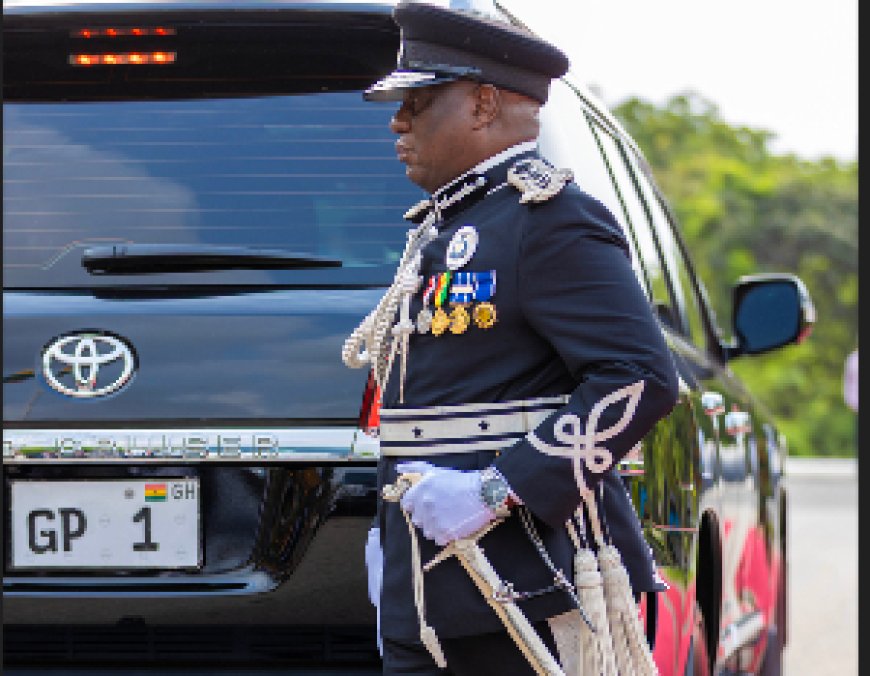
On Ghana’s grand ceremonial days—be it the solemnity of Independence Day, the political theatre of the State of the Nation Address, or the reverence of Police Memorial Day—one figure often stands apart. The Inspector-General of Police (IGP), currently Christian Tetteh Yohuno, takes his place not just as a senior official, but as a walking symbol of the state. His attire on these occasions is no mere clothing; it is a meticulously crafted language of authority, tradition, and duty.
A History Woven in Fabric and Symbol
The story of the IGP’s ceremonial dress, often called full dress or parade uniform, is deeply intertwined with Ghana’s own history. Its roots trace back to the colonial era, carrying influences from British military and police traditions. Yet, over decades, it has been adapted and imbued with Ghana’s own institutional identity. Every IGP, from the first colonial commissioner H.W.M. Bamford to Ghana’s first Ghanaian IGP, E.R.T. Madjitey, and now to IGP Yohuno, has worn a version of this uniform, each adding a layer to its legacy. It is a visual statement that connects the present-day Police Service to its past, signaling continuity, discipline, and legitimacy.
The Anatomy of Authority: Deconstructing the Uniform
When the IGP steps onto the parade ground, every element of his uniform is a deliberate symbol, communicating power, order, and service.
The Peaked Cap: A Crown of Command
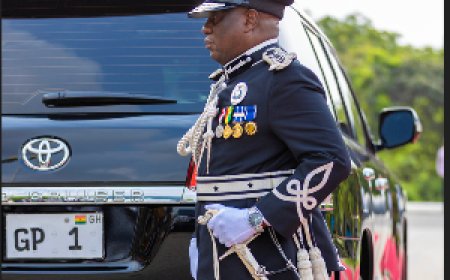
At the very top sits the peaked cap, a rigid and unmistakable symbol of authority. Its polished visor and the silver-tone oak leaves—or laurel embroidery—trimming it are not merely decorative. They are heraldic signs of senior rank and command, echoing traditions where the headgear itself signified the wearer’s right to lead. The cap’s crisp lines set the tone for the entire ensemble: one of order and precision.
The Tunic and Insignia: The Core of the Service
The IGP’s high-neck ceremonial tunic is distinct, designed to mark him as the primus inter pares—the first among equals. Key features include:
-
Gorgets affixed around the collar, historical remnants of armor that now symbolize the protection of the law.
-
Epaulettes on the shoulders, which prominently display the unique rank insignia of the IGP, broadcasting his position to all.
-
Lanyards and Aiguillettes, braided cords draped over the shoulder. The white aiguillette is a particularly striking ornament, signifying ceremonial duty and special appointment, a tradition shared across Ghana’s security services.
The Medals: A Chest of History
Perhaps the most personal and storied element is the cluster of medals pinned to the left breast, close to the heart. These are not just decorations; they are a "moving ledger of service." Each medal, with its unique ribbon and metal, represents years of dedicated service, specific commendations, or national recognition. They are worn in a strict order of merit, starting with Ghanaian national honours, followed by sub-regional and international awards. To those who understand, they silently narrate a story of sacrifice, leadership, and a career lived in service to the nation.
The Sash and Sword: Symbols of Duty and Justice
Across the torso runs a bold sash, a stroke of regimental colour (often gold for senior ranks). Historically a feature of battlefields and royal courts, today it serves as a ceremonial reminder of the wearer’s solemn responsibility. This sash is more than decorative; it is functionally designed to help secure the ceremonial command sword when the IGP is seated or standing.
Hanging at the IGP’s side is that sword—a powerful anachronism. No longer a weapon of combat, its polished hilt and sheathed blade are potent symbols. It represents that the authority wielded is that of the rule of law, disciplined and restrained. During parades, it is carried with great respect, anchoring the entire uniform in the gravity of command.
The Boots: Grounded in Discipline
Finally, the eye travels down to the polished black boots, shined to a mirror finish. They are the foundation, grounding the entire ensemble. They speak not just of readiness, but of precision and discipline, especially during synchronized ceremonial drills. The subtle click of a gold heel plate against the parade ground becomes an audible punctuation mark, signaling the measured step of authority itself.
More Than Fabric: A Uniform Lived
To the casual observer, the gleaming aiguillette, the colourful medals, and the ceremonial sword might appear as mere ornamentation. But as Geroge Owusu’s reflection so eloquently argues, they are a narrative device. On Ghana’s ceremonial lawns, the IGP’s uniform tells a story of institutional legacy, national pride, and the solemn duty of service. It is a language of symbols, making visible the abstract concepts of order, honour, and vigilant service. It is, in the truest sense, a uniform not merely worn, but lived.
So, the next time you see the IGP in full regalia, positioned beside the President—acting, as protocol demands, as an Aide-de-Camp—you will recognize that you are witnessing a carefully constructed piece of national heritage, stitched, polished, and carried with intent.
What's Your Reaction?
 Like
0
Like
0
 Dislike
0
Dislike
0
 Love
0
Love
0
 Funny
0
Funny
0
 Angry
0
Angry
0
 Sad
0
Sad
0
 Wow
0
Wow
0